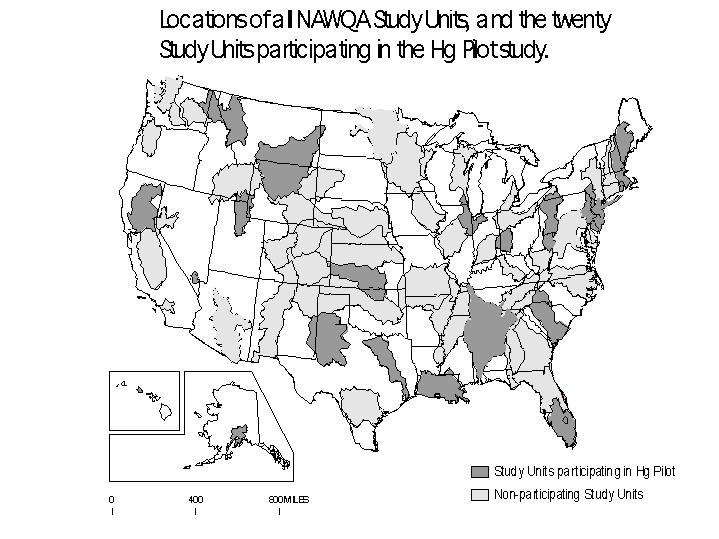
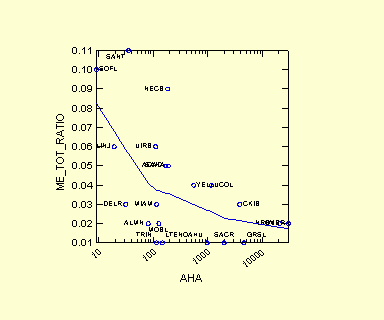
Date: Thu, 4 Mar 1999 09:59:06 -0700 Subject: Trace Element News v.4 -- Mercury From: Dennis HelselTo: nawqa_97pc@srv1rvares.er.usgs.gov, nawqa_91pc@srv1rvares.er.usgs.gov, nawqa_94pc@srv1rvares.er.usgs.gov Cc: "John S Zogorski, Supervisory Hydrologist, Rapid City, SD" , "Robert J Gilliom, Supv. Hydrologist, Sacramento, CA" , "Jeffrey D Stoner, Supervisory Hydrologist, Denver, CO" , "Carol A Couch, Hydrologist, Norcross, GA" , "Alan H Welch, Hydrologist, Carson City, NV" , "Peter C VanMetre, Project Chief, Hydrol(RGEG), Austin, TX" , "Lawrence R Deweese, Fish and Wildlife Biologist, Denver, CO" , "David P Krabbenhoft, Research Hydrologist (GeoChem), Middleton, WI" , "Edward Callender, Hydrologist, Reston, VA" , "Terry M Short, Physical Scientist, Menlo Park, CA" , "Michael T Koterba, Hydrologist, Baltimore, MD" , "Dennis A Wentz, Willamette NAWQA Chief, Portland, OR" , "William G Brumbaugh, Research Chemist, Columbia, MO" , "Timothy L Miller, Chief, NAWQA, Reston, VA" , "William G Wilber, National Synthesis Coordinator, Reston, VA" , "Jeffrey T Armbruster, Asst. Reg. Hydr.-NAWQA, Norcross, GA" , "Michael C Yurewicz, Asst. Reg. Hydrol.-NAWQA, Reston, VA" , "Ivan C James II, Asst. Reg. Hydrologist-NAWQA, Denver, CO" , "Marc A Sylvester, Asst. Reg. Hydrologist-NAWQA, Menlo Park, CA" , reg.wqspecs@srv1rvares.er.usgs.gov, "Wayne W Lapham, Hydrol(Geol) GW Spec, Reston, VA" , "Larry R Shelton, Hydro Tech, Sacramento, CA" , "Robert M Hirsch, Chief Hydrologist, Reston, VA" Mercury in Streambed Sediments Trace Element Synthesis News v.4 Call or email for copies of previous TE news blurbs: v.1 Trace Element Synthesis Staffing and plans 2/10/99 v.2 Changes to TE lab methods for bed sediments 2/19/99 v.3 Well Selection for Subunit Surveys 2/26/99 ----------------------------------------------- Status of NAWQA / Toxics Program pilot study: Mercury in Fish, Water and Streambed Sediments Twenty-one NAWQA study units participated in collecting fish, water and streambed sediment samples at the end of FY98 as a pilot study for a national mercury survey in those media, focusing on the characteristics which enhance methyl mercury production. Results of the water and sediment samples have been completed. Analyses of fish are being performed now, a joint effort between WRD (Krabbenhoft and others) and BRD (Bill Brumbaugh and others). Dave Krabbenhoft is presenting current results at the USGS Toxics Program meeting on Monday, March 8. A summary is below for your information. More information is available in the paper which Dave has sent to each of the study units participating in the project. For more detail on the results, contact Dave Krabbenhoft [dpkrabbe] AFTER March 8. For general information on Trace Element Synthesis, contact Dennis Helsel [dhelsel]. A National Pilot Study of Mercury Contamination of Aquatic Ecosystems along Multiple Gradients SUMMARY OF RESULTS A national scale pilot study to examine relations of total Hg (HgT) and methyl mercury (MeHg) in water, sediment and fish was conducted in the summer and fall of 1998. Samples were collected at 106 sites from 21 study units across the United States, including Alaska and Hawaii (see attached figure sites.jpg). Sites were selected to provide a diverse array of environmental settings, water chemistry, and Hg loading. Wetland density was the single most important basin-scale factor correlated with MeHg production. At low concentrations, MeHg production generally increases with increasing tatal Hg in the sediment. But at high total Hg concentrations (>1,000 nanograms per gram; ng/g) in sediment there was little evidence of increasing MeHg production with increasing total Hg. An atmospheric Hg accumulation index (AHA) was developed for differentiating areas where atmospheric Hg deposition was the dominant Hg source from areas with significant on-site sources. Four study basins along the east coast of the United States had the greatest methylation efficiency, as reflected by the MeHg/HgT ratio in sediments (see attached figure AHA.jpg). Nationwide, sub-basins characterized as mixed agriculture and forest cover types had the highest methylation efficiency, whereas areas affected by mining had the lowest efficiency. Study Units participating in the pilot: ACAD, ALMN, CKIB, DELR, GRSL, LINJ, LTEN, MIAM, MOBL, NECB, NROK, NVBR, OAHU, SACR, SANA, SANT, SOFL, TRIN, UCOL, UIRB, YELL Study Units with greatest % of mercury in seds as MeHg: SANT, SOFL, NECB, LINJ Study Units with highest atmospheric deposition rates: NECB, LINJ, SOFL, DELR, ALMN Study Units where atmospheric deposition is dominant source (low AHA): SOFL, LINJ, DELR, SANT Study Units with dominant local sources of total mercury (high AHA) -- (proposed source in parentheses): NVBR, NROK, GRSL, CKIB, SACR, UCOL (mining) OAHU (volcanic emissions) Study Units with highest % of wetlands in basins sampled (data not available for 5 study units): SOFL, LINJ, NECB, SANT Average Me/Tot Hg ratios in bed sediment, by land-use group and % wetlands: Group Me/Tot Hg ave % Wetland Ag/Forest 8% 20% Background 2% 8% Agriculture 2% 3% Urban 1% 6% Mining 0.1% 1%
Map showing the twenty study units participating in the Hg pilot study (76Kb, JPEG)
Plot of mercury ratios (26Kb, JPEG)
--------------------------------------------------------------
   Dennis R. Helsel                    Ph:  (303) 236-2101 x227
   Trace Element National Synthesis    Fax: (303) 236-4912
   U.S. Geological Survey
   PO Box 25046, MS-415                dhelsel@usgs.gov
   Denver, CO   80225